



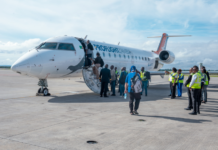




The US Transportation Security Administration (TSA) has confirmed that it will soon ask foreign airports that send flights directly to the US to add additional security screenings on containers of powders in travellers’ carry-on luggage.
While the TSA began scrutinizing containers of powders last year already, it will effective 30 June, request foreign airports with non-stop U.S. flights to match the effort.
According to an article published by USA Today, the focus is on containers holding at least 350 milliliters of powder.
Effective, this week, the TSA and airlines are also going to step up awareness efforts about the change, urging passengers to pack larger containers in checked luggage and remove smaller containers from carry-on bags for separate screening, similar to small containers of liquids.
The TSA however, made it clear that the security effort isn’t a ban, but rather to eliminate the risk for a traveller returning with a large container of for instance Moroccan spice to be asked by a checkpoint officer to throw away a suspicious powder before boarding the plane.
“For ease of travel, TSA recommends placing larger items in checked baggage prior to arriving at the security checkpoint,” said Mike Bilello, a TSA spokesman. “The international aviation community and industry’s actions represent collaborative approaches that greatly enhance global aviation security.”
The main security concern is from improvised explosives, but TSA is also concerned about fentanyl or pepper spray in the cabin.
TSA says powders can include items like cosmetics, baby powder and protein or energy powder mixes, among others. Gun powder remains prohibited from all checked or carry-on luggage.
“We encourage people to divest certain items – especially organic items – in order to get a clearer view of what’s going on inside the bag,” said Mike England, a TSA spokesman. “It’s something we advise people to do. We’re asking our foreign partners to do what we’re already doing domestically.”
The effort is another example of tightening aviation security. Airport checkpoint security was federalized under TSA after the terrorist hijackings Sept. 11, 2001, and has become stricter in recent years with developments of non-metallic explosives.